Ponta da Lagoinha: The Beach Where Africa and Brazil Were Once the Same Mountain Range
520 million years ago, the rocks at Ponta da Lagoinha were part of a mountain range as tall as the Himalayas — formed when South America and Africa collided into a single landmass. Today it's a quiet stretch of natural pools and folded stone most visitors to Búzios walk straight past. Here's why it's worth stopping.
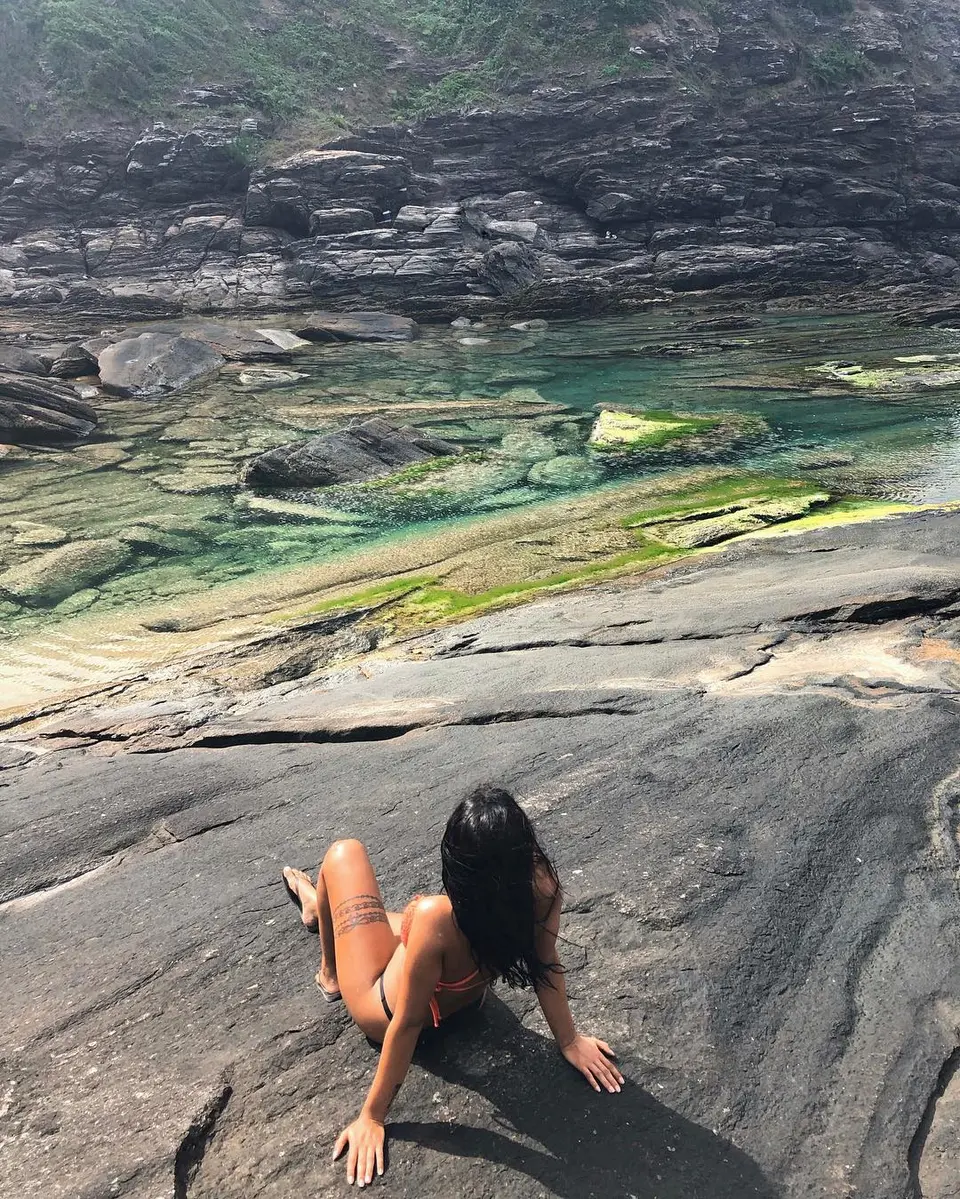
There's a spot in Búzios where the rocks under your feet are old enough to remember a version of Earth with one fewer ocean on it.
It's called Ponta da Lagoinha, and it doesn't announce itself. No sign-worthy beach club, no crowd, nothing that screams "stop here" the way Praia do Forno's pink sand does a few minutes down the road. What it has instead is something most visitors never think to look for at a beach: a genuinely staggering geological story, written directly into the stone.
The Mountain Range That Used to Be Here
Around 520 million years ago, what is now the Búzios peninsula sat inside a massive mountain range — comparable in scale to today's Himalayas. It formed when two enormous landmasses, the early versions of South America and Africa, collided and fused into a single supercontinent geologists call Gondwana.
That collision didn't just push up mountains. It subjected the rocks here to extreme pressure and heat, folding and compressing them into the twisted, layered stone you can still see exposed at Ponta da Lagoinha today. Scientists have dated this specific geological event — known locally as the Búzios Orogeny — to between 500 and 520 million years old.
For context: that's older than most fish, older than the dinosaurs by a few hundred million years, and roughly the same age as the first complex animal life on the planet.
Then Brazil and Africa Split Apart — And Took the Rocks With Them
Gondwana didn't last forever. Around 130 million years ago, the supercontinent began tearing itself apart, opening up the South Atlantic Ocean in the gap and pulling South America and Africa slowly away from each other.
The rocks at Ponta da Lagoinha are a leftover fragment of that ancient join — and geologists have found rock types and mineral signatures here that match formations on the West African coast, on the other side of the ocean that didn't exist yet when these stones were formed.
It's part of why the coastlines of Brazil and West Africa look like they'd fit together on a map, puzzle-piece style, if you could somehow push the Atlantic closed again.
What This Looks Like in Person
You don't need a geology degree to notice that something's different about these rocks. They're folded, banded, layered at angles that no normal coastal erosion creates — visibly the product of forces far beyond wind and waves.
The formations create a series of natural seawater pools among the stone, sheltered enough to be calm even when the open Atlantic just beyond them isn't. The whole area is nicknamed locally the "Brazilian Himalayas" — not for height, but for the geological kinship with the real Himalayas, which formed through the exact same kind of continental collision, just on the other side of the planet and a different (more recent) chunk of geological time.
From the top of the point, the view stretches to Praia do Forno's pink sand on one side and out toward a scatter of small islands — Âncora, Gravatás and Ilhotes — visible offshore.
An Almost Ceremonial Atmosphere
Some locals describe Ponta da Lagoinha as an "energy portal" — folklore rather than geology, but it fits the mood of standing on rock this old while the Atlantic works on shaping it into something new.
There are no kiosks, no signs and usually no crowd. Visitors tend to sit alone among the folded rock formations and watch the sea, which is exactly why the place keeps its contemplative feel even in high season.
Why It's Quieter Than It Should Be
Ponta da Lagoinha sits tucked between two of Búzios's better-known beaches — Praia da Foca and Praia da Ferradura — which means most visitors walk or drive straight past it without realizing what's there. No major signage draws attention to it (a small informational plaque was only installed by the local council in recent years), and it has none of the infrastructure — kiosks, beach chairs, music — that pulls crowds toward Búzios's more obvious stops.
That obscurity is the whole appeal. Even during Búzios's busiest holiday weeks, Ponta da Lagoinha regularly stays close to empty.
A Site Brazil Has Proposed for UNESCO Recognition
This isn't just a pretty rock formation with a good backstory. Researchers have formally proposed Ponta da Lagoinha as a UNESCO World Heritage geological site, arguing that the rocks here hold genuine scientific value for understanding how Gondwana assembled and broke apart — effectively a natural museum that should be preserved for future study.
It's a rare thing: a beach stop on a tourist route that's simultaneously being considered for one of the highest forms of scientific heritage protection in the world.
The Best Time to See It
Sunrise is when Ponta da Lagoinha is at its most atmospheric — one of the calmest, least visited spots in Búzios to watch the sun come up over the rock pools, with almost nobody else around.
Sunset works well too, with good light angling across the folded stone and a clear view out toward the offshore islands.
How It Fits Into the Buggy Tour
Ponta da Lagoinha is one of the stops on our private buggy tour — the same 90-minute route that covers Praia do Forno's pink sand, the João Fernandes Viewpoint and six other beaches and viewpoints across both sides of the peninsula. The guide explains the geological backstory on-site, which turns a quick photo stop into something genuinely memorable.
Without a guide, most visitors don't realize what they're looking at — the rocks just look unusual. With the context, they look like exactly what they are: a fragment of a 500-million-year-old mountain range that once connected two continents.
How to Book
The private buggy tour includes Ponta da Lagoinha as part of the full route — 8 beaches and 3 viewpoints in 90 minutes. Hotel pickup included, R$100 per person, no upfront payment required.
Book by WhatsApp with your preferred date and hotel name — we confirm availability right away.
Planning your trip? Start with our private buggy tour in Búzios, then check our boat tour in Búzios to make the most of the region.
Book your private buggy tour in Búzios directly on WhatsApp — no deposit required.